EdTech
From concept to live university platform under real conditions
A proof-of-concept learning tool transformed into a working LMS — deployed and validated inside a real academic institution during COVID.
~1,000 active users (students + lecturers)
8× faster test evaluation
25% increase in lecture attendance
One faculty, live deployment
System context
This engagement started with an EdTech product company that had built a proof-of-concept learning platform. The core idea was promising, but the product had not yet been tested in a real academic environment — which meant it had no usage data, no alignment with actual university workflows, and no path to the institutional decision-makers who would approve a deployment.
The company needed to answer a fundamental question before investing further: Can this product actually work inside a real university — for both students and lecturers?
SoltaTech was brought in to make that question answerable.
Where the challenge was
The product team had technical capability but no access to the academic world. They had no experience working with university administration, no understanding of day-to-day teaching workflows, and no direct relationship with institutions that could run a pilot.
At the same time, COVID had created immediate, urgent demand for remote learning infrastructure. The window to move fast was real — but so was the risk of building in the wrong direction without real user feedback.
The product itself compounded the challenge. In its original form, it was a one-directional audio tool — not a full learning platform. To be viable in an academic environment, it needed to become something significantly more capable.
What changed
SoltaTech's role covered both institutional access and product direction.
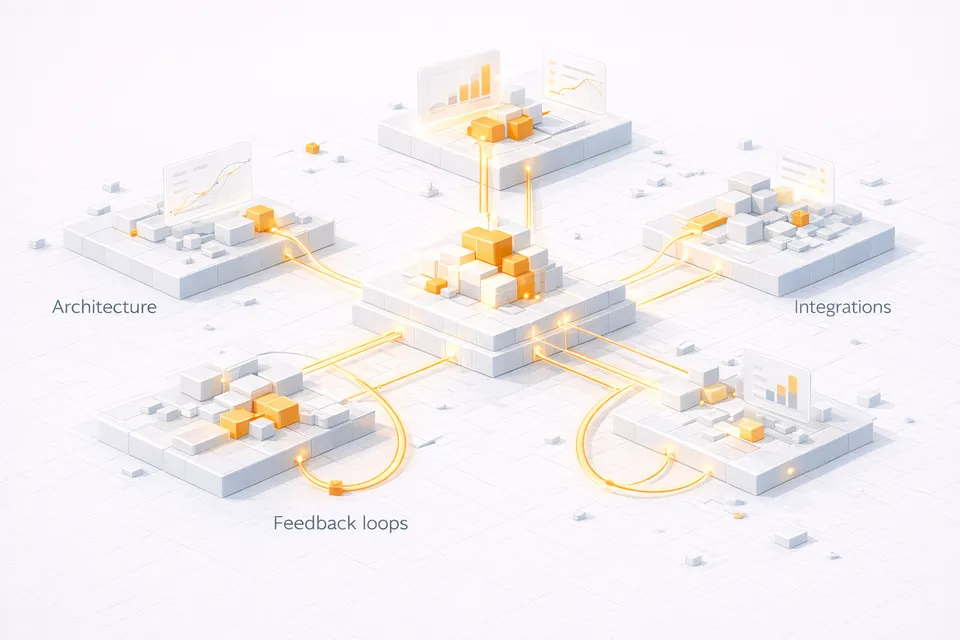
On the access side: establishing direct collaboration with a large Ukrainian state university — one of the country's leading research institutions — and facilitating a formal cooperation agreement that made the pilot possible. Acting as intermediary between the product team and academic stakeholders, so that real workflows, real constraints, and real user needs could shape what was being built.
On the product side: designing structured feedback loops with students and lecturers throughout the pilot, translating what was learned into concrete product and architecture decisions, and guiding the evolution from a niche audio tool into a functional LMS platform.
Key decisions
- Pivoting from one-directional audio to a real-time interactive platform
- Prioritising video communication and chat as core learning components
- Reducing lecturer workload through automated grading and content access
- Integrating existing solutions (video infrastructure, anti-plagiarism) instead of building from scratch
- Adopting an iterative, feedback-driven development model from day one of deployment
Outcome
The pilot ran inside a single faculty of a large national university, supporting approximately 1,000 users — students and lecturers — under real academic conditions.
- Test evaluation time dropped from ~2 hours to ~15 minutes — roughly an 8× improvement
- Lecture attendance increased by approximately 25%
- Communication between lecturers and large student cohorts (~300 students per lecturer) improved meaningfully
- Submission quality and academic integrity improved through integrated anti-plagiarism tooling
- A limited audio concept became a working LMS with video, testing, grading, scheduling, and content management
What this case shows
Most EdTech products fail not because the idea is wrong, but because they never get access to real users in real institutional environments. Getting into a university requires a cooperation agreement, stakeholder relationships, and someone who understands how academic workflows actually operate.
SoltaTech provided that access — and used it to run a structured validation loop that shaped the product in real time. The result was a platform that worked, in conditions that were genuinely demanding.
One honest note: the broader EdTech market during COVID became extremely competitive, with large players offering free solutions at scale. Product-market fit proved achievable. Distribution at scale was a different problem. That outcome is part of the story too.
Technical layer
- Video conferencing integration
- Real-time communication and chat
- Automated testing and grading workflows
- Scheduling and content management
- Anti-plagiarism system integration
- Iterative deployment under live academic conditions
Building a product that needs real-world validation?
We can help you get into the right environments, run structured feedback loops, and shape the product based on what actually happens in production.
Start a consulting conversation